Yandex: Cross-Platform Travel App. Hotel Booking MVP Design
Case Study
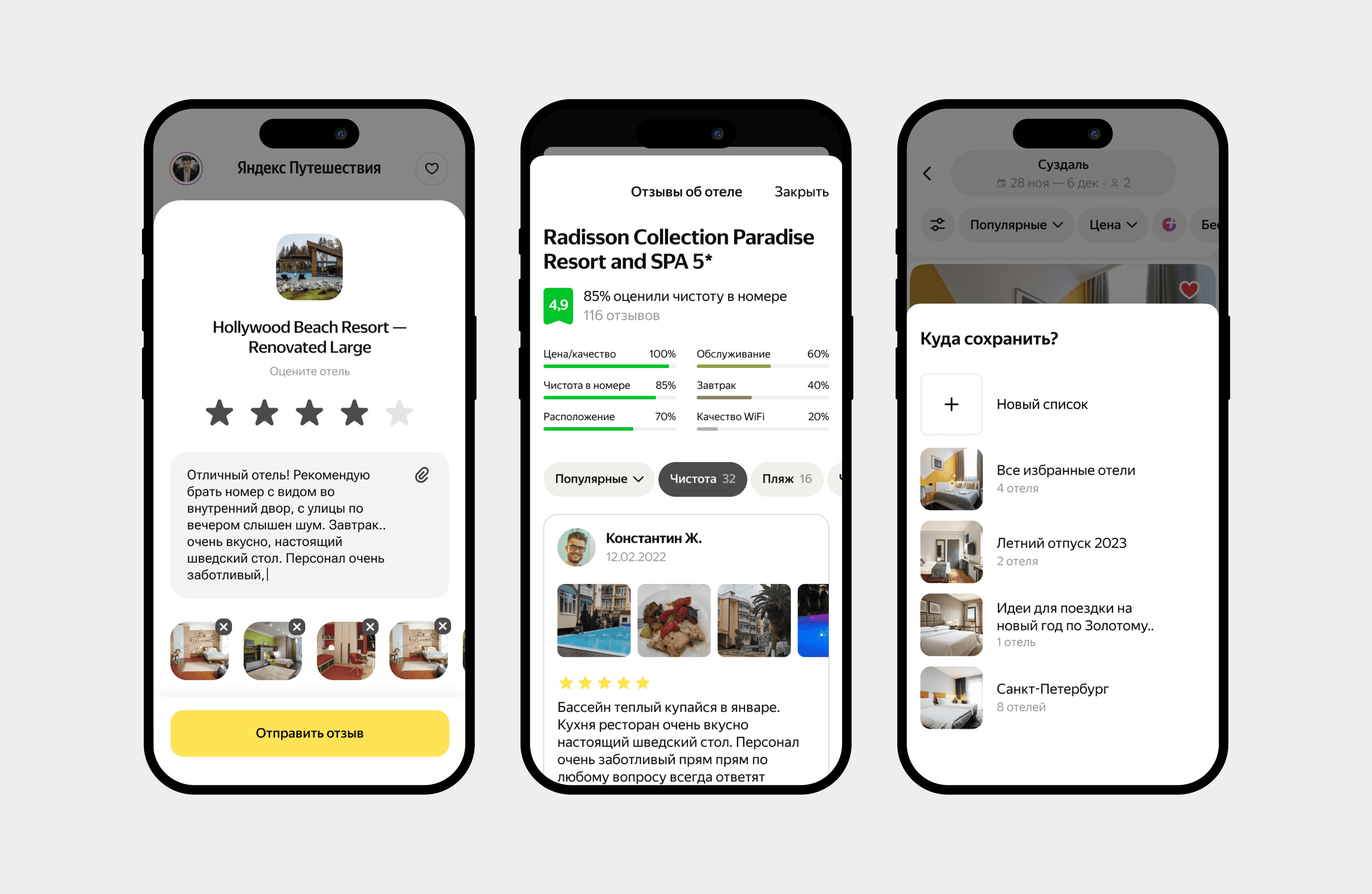
Yandex Travel started as a web platform for booking hotels, flights, and ground transport. The business goal was to launch iOS and Android apps to improve mobile UX, increase bookings, and shift traffic from web to application
Problems
The website was outdated and required modernization. It was inconvenient to use on the go or while traveling, particularly on mobile devices. Additionally, travelers faced numerous challenges that were not adequately supported by our service.
Busines Goals
Launch an app MVP within a tight timeline
Make the app the primary source of hotel bookings
Increase booking conversion rate
Improve retention and repeat bookings
Team Challenge
Adapt complex web flows to mobile app
Improve conversion and usability
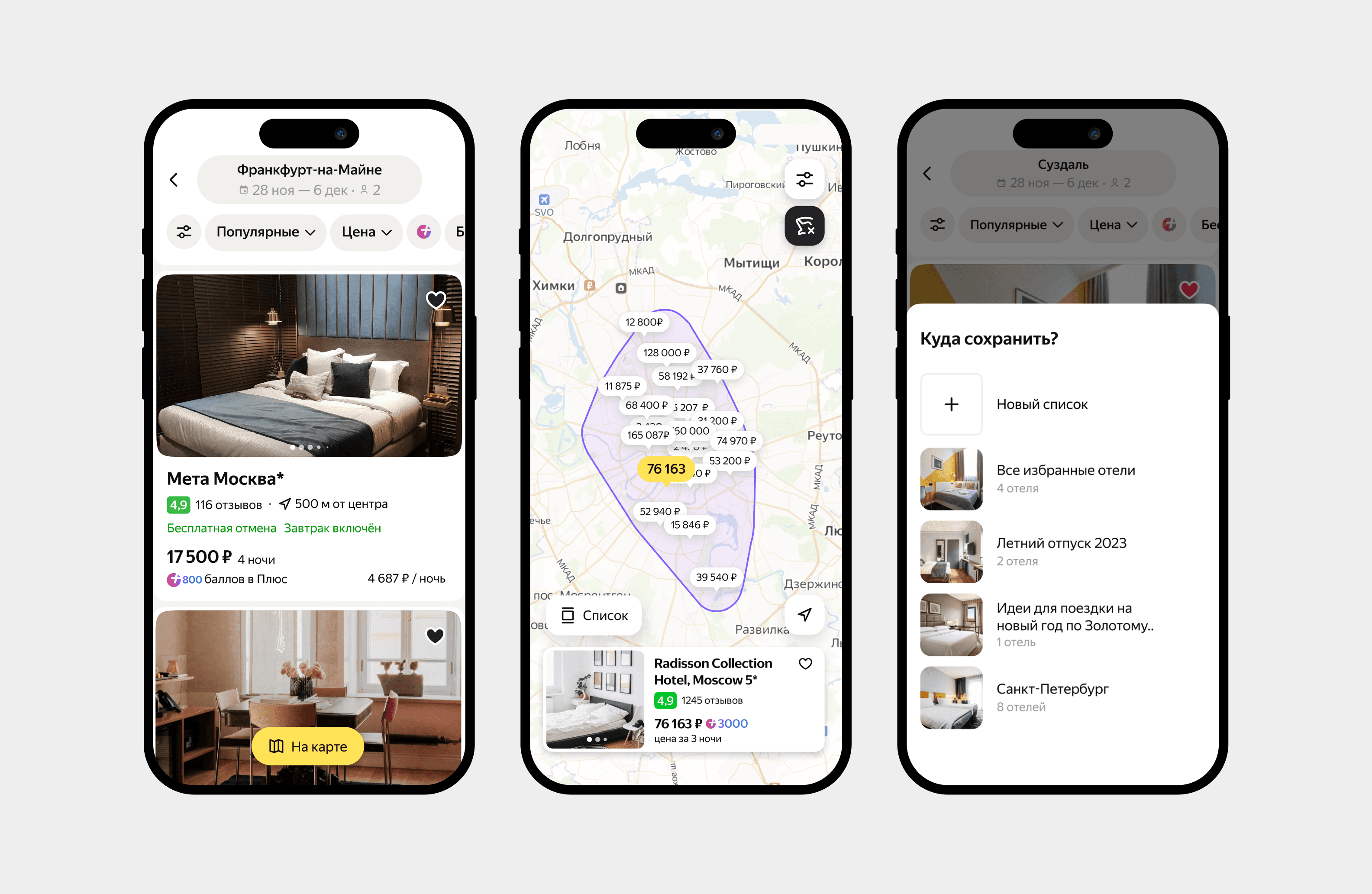
New features such as map-based hotel search
Launch a high-quality MVP fast
Research and defining MVP
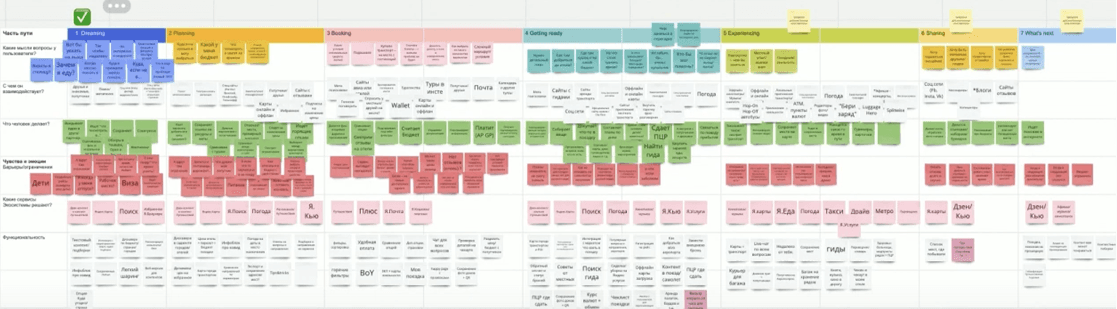
Our UX research team conducted 10 in-depth interviews to understand how users engage with Yandex Travel and competing services. We define several big segments of user needs. Based on user research and key business goals we prioritised the MVP features
My Role
I joined the team to design the cross-platform (iOS and Android) hotel booking experience and help launch an MVP with refreshed, mobile-first UX patterns
My Responsibilities as the Product Designer
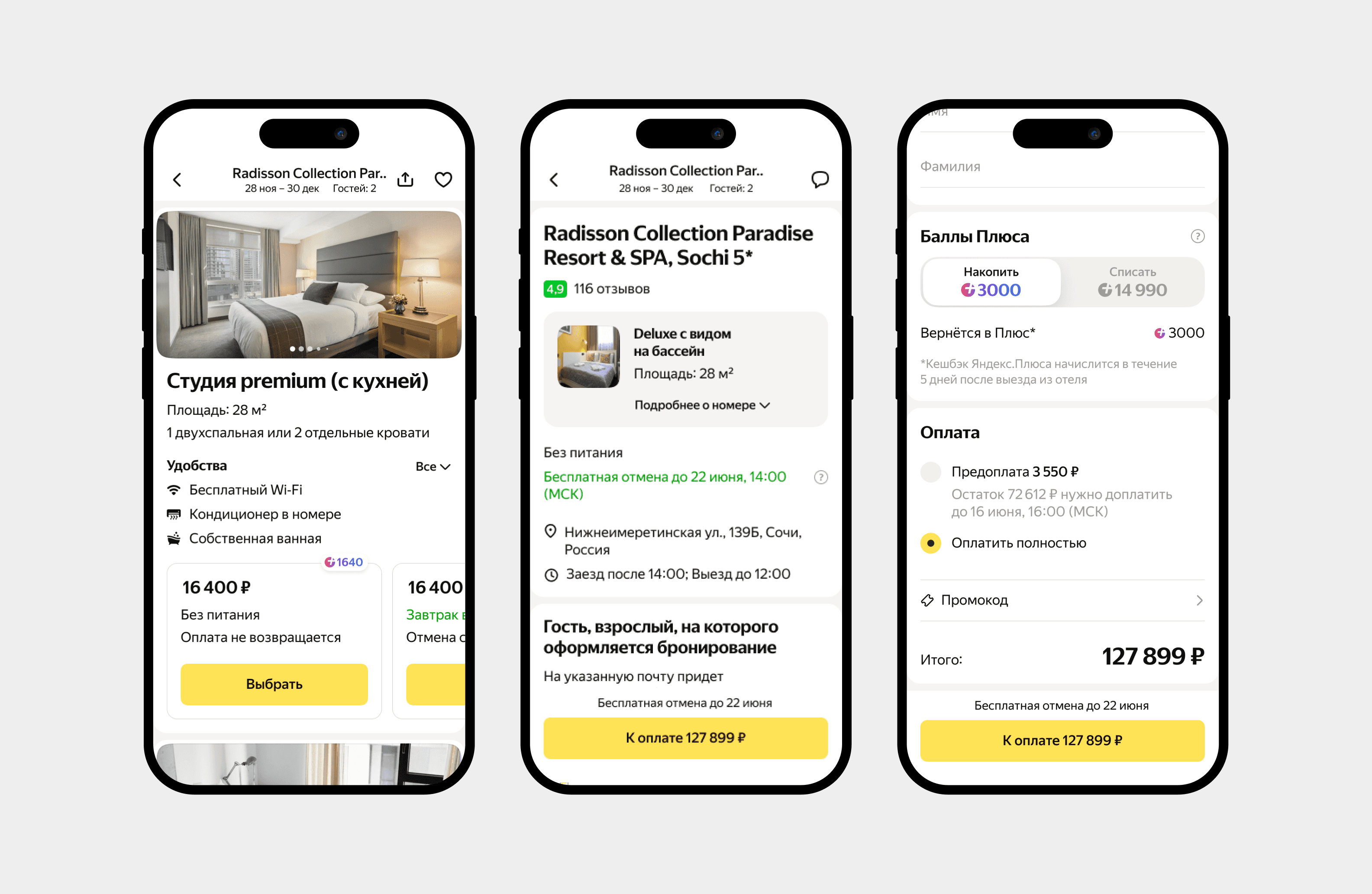
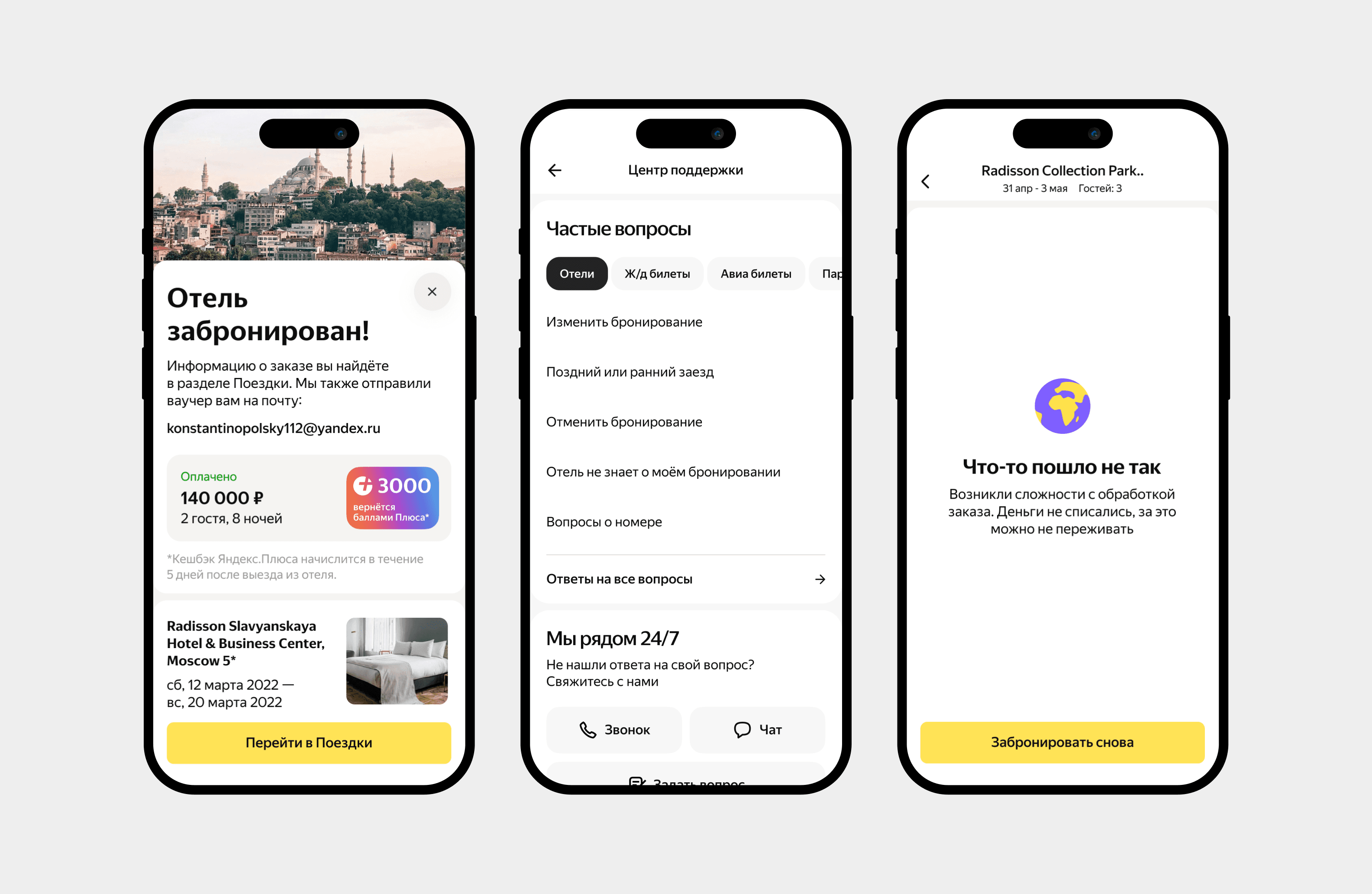
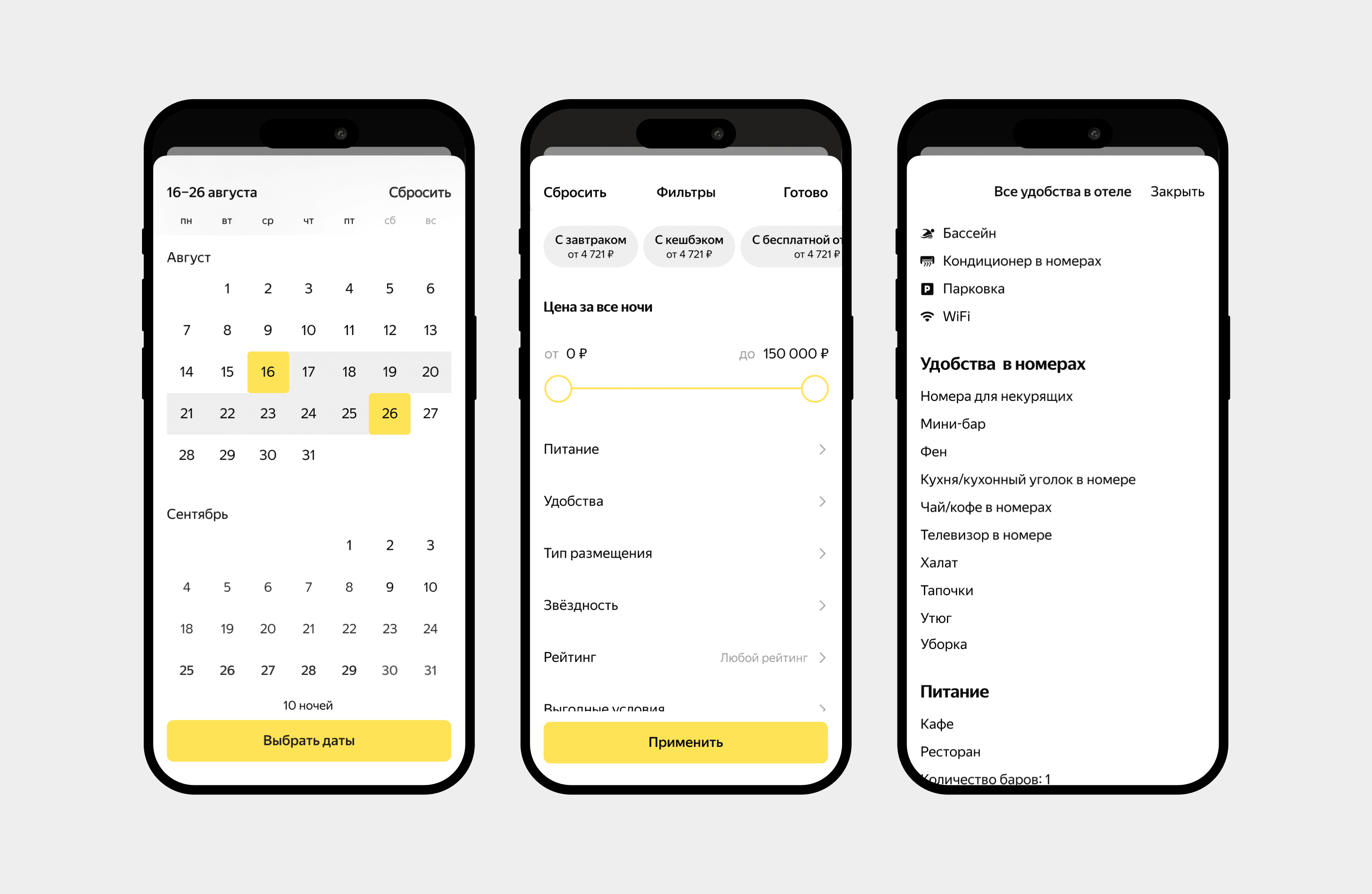
Designed the full hotel booking flow end to end
Ran design reviews and presented solutions to stakeholders
Conducted user interviews and validated hypotheses
Prepared detailed specifications and collaborated closely with developers
Work with cross-functional product team
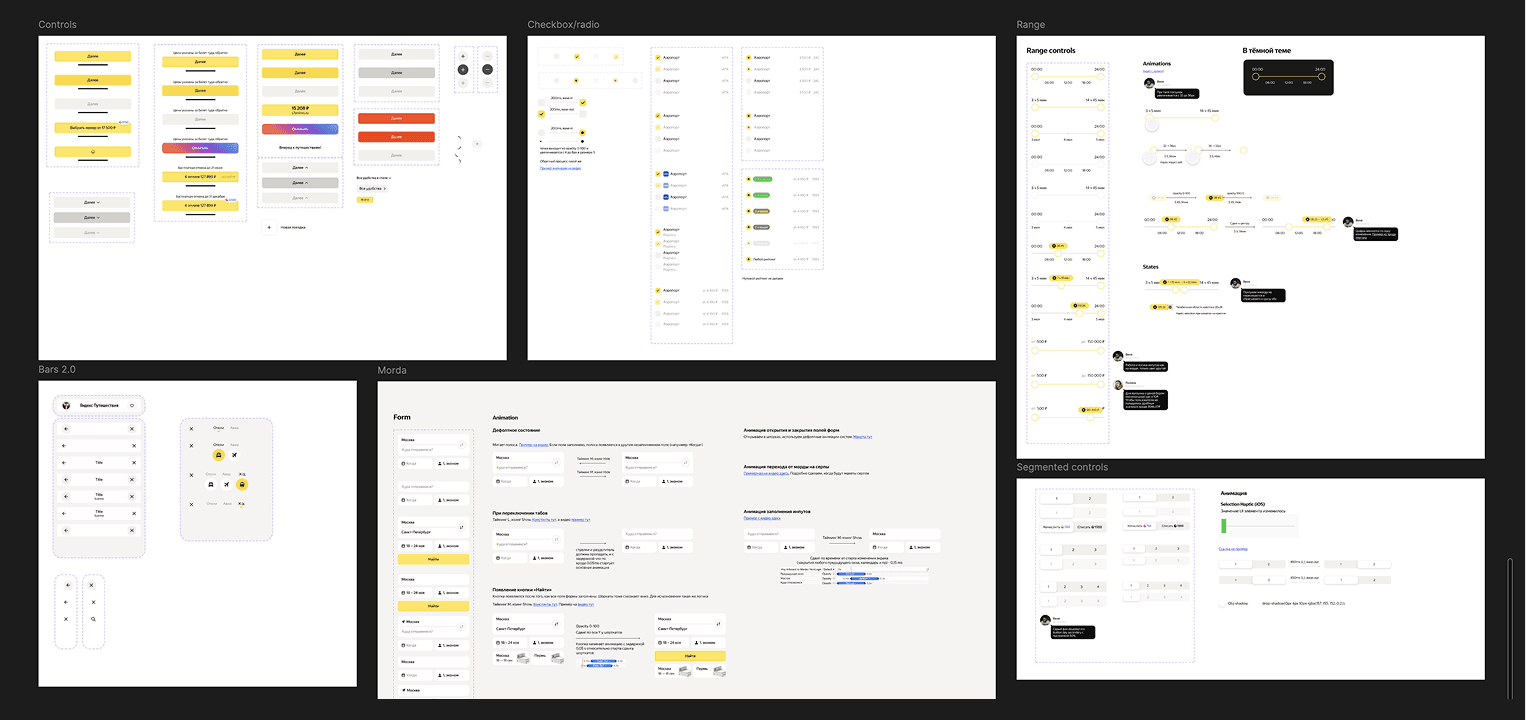
Set essentials of iOS and Android UI Kit fast (based on the Yandex UI Kit "Lego")
My Working Process
Research & benchmarking: market analysis, best practices, hypothesis formulation
User flows & prototyping: scenarios, rough prototypes, wireframes
Testing: user interviews, copy and UI validation
Delivery: polished UI, interactive prototypes, development handoff, design review
Iteration: post-launch analysis and continuous improvements
Research & Validation
Qualitative: I conducted user interviews with interactive Figma prototypes
Quantitative: click tracking, time-to-action metrics, and side-by-side comparisons of wording, UI elements, and imagery
Results
01
App Store & Google Play Rankings
Over 1,100 ratings on the App Store with a 4.8 average, and 4.3 on Google Play, reflecting strong user satisfaction
02
Mobile as the Primary Booking Channel
App became the primary booking channel within 3 months
03
Higher Conversion
The mobile app achieved a ~15% higher booking conversion rate compared to web within 6 months
04
Improved Retention & Repeat Bookings
Repeat bookings and user retention increased by ~12% within 6 months
05
Market Share Expansion
Market share doubled within 12 months, positioning Yandex Travel as the market leader